
Types of Concrete Footings We Install
Not all footings are the same, and what works for a fence won’t work for a house extension. Let me break down what we do most often around Townsville.
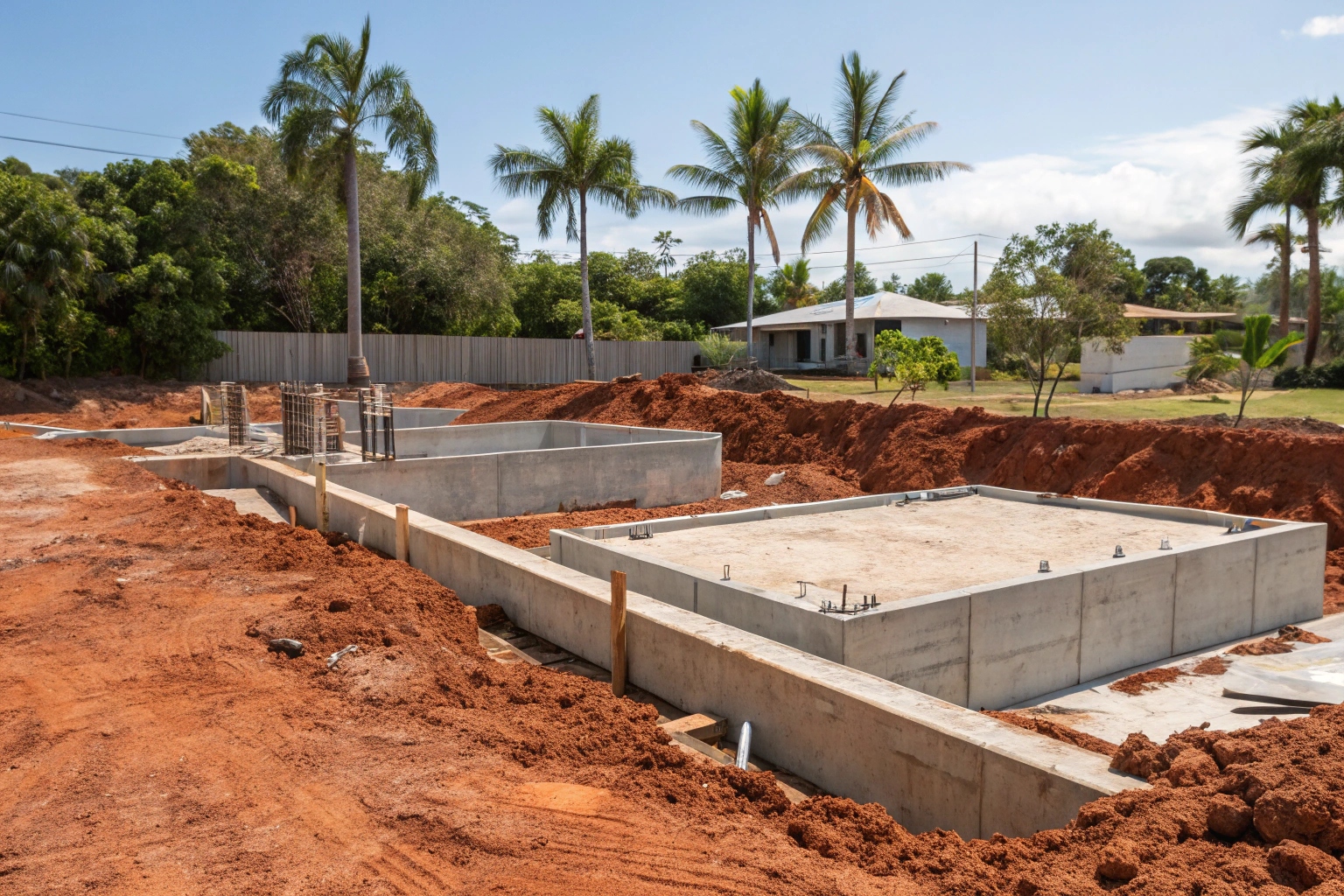
House and Building Footings
These are the big ones – literally. When you’re building a new home or adding an extension, you need footings that’ll support the entire weight of the structure. We’re talking strip footings along walls and pad footings under posts and columns. For Townsville’s soils, we typically go 450mm to 600mm deep, sometimes more if the engineer says so. The steel reinforcement is heavier, the concrete grade is higher, and everything needs to meet cyclone ratings.
Fence and Retaining Wall Footings
Fence footings might seem simple, but get them wrong and you’ll have posts leaning within months. We dig below the reactive clay layer, use the right concrete mix, and space them according to the fence height and wind loads. Retaining walls are a whole different beast – they’re holding back tonnes of earth, dealing with water pressure, and need proper drainage behind them.
Deck, Pergola and Carport Footings
These outdoor structures cop the full force of Townsville’s weather. Your pergola footings need to handle cyclonic winds trying to rip the roof off. Deck footings need to stay level even when the ground’s moving underneath. We use pad footings with concrete piers, properly reinforced and at the right depth for your soil type.

Engineering Requirements and Soil Testing
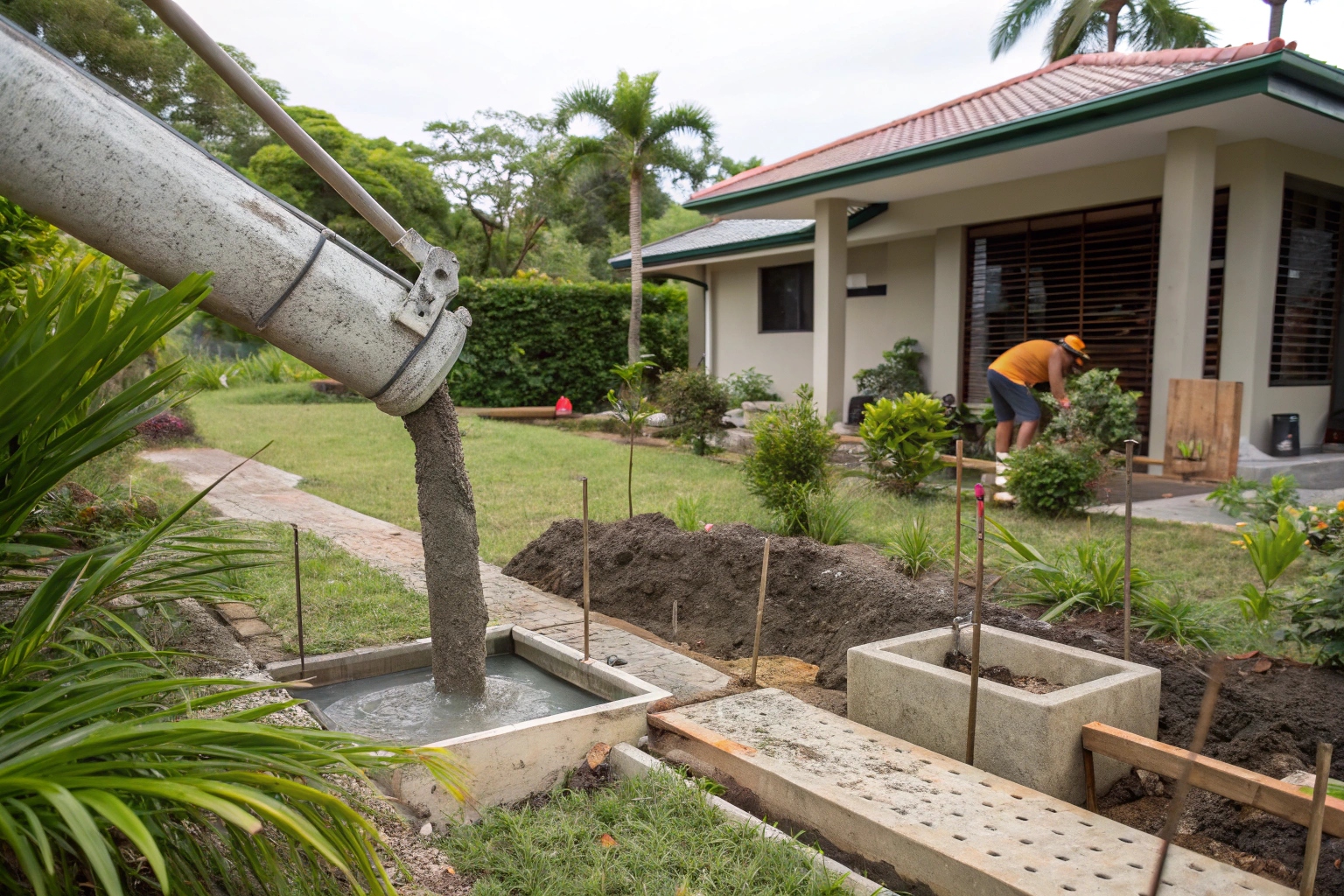
You can’t just start digging holes and pouring concrete. Not in Townsville anyway. Every footing job needs proper engineering, and that starts with understanding what’s under your property.
A geotechnical engineer tests your soil to determine its classification. Most of Townsville sits on Class H or Class M reactive clay – that’s moderately to highly reactive. The engineer uses this classification to design your footings according to Australian Standard AS2870. They’ll specify the depth, width, reinforcement size and spacing, and concrete grade needed for your soil type.
For house footings and major structures, you’ll need a structural engineer’s design. They calculate the loads your building will place on the footings and make sure everything’s sized correctly. This isn’t optional – council requires these designs before they’ll issue permits.
The wind rating matters too. Townsville is in cyclone regions C2 or C3 depending on your suburb. Your footings need to be designed to keep your structure anchored when we get those big blows. That means deeper footings and additional tie-down specifications for posts and frames.
Once footings are poured, council inspectors come out to check them before you can continue building. The engineer might need to inspect as well. You’ll get certification confirming everything meets the design specifications. Keep these documents – you’ll need them for insurance, future sales, and your own peace of mind.
How We Install Your Concrete Footings
The actual installation process isn’t complicated, but every step needs to be done right. Miss one detail and you’ve got problems down the track.
Common Footing Challenges Around Townsville
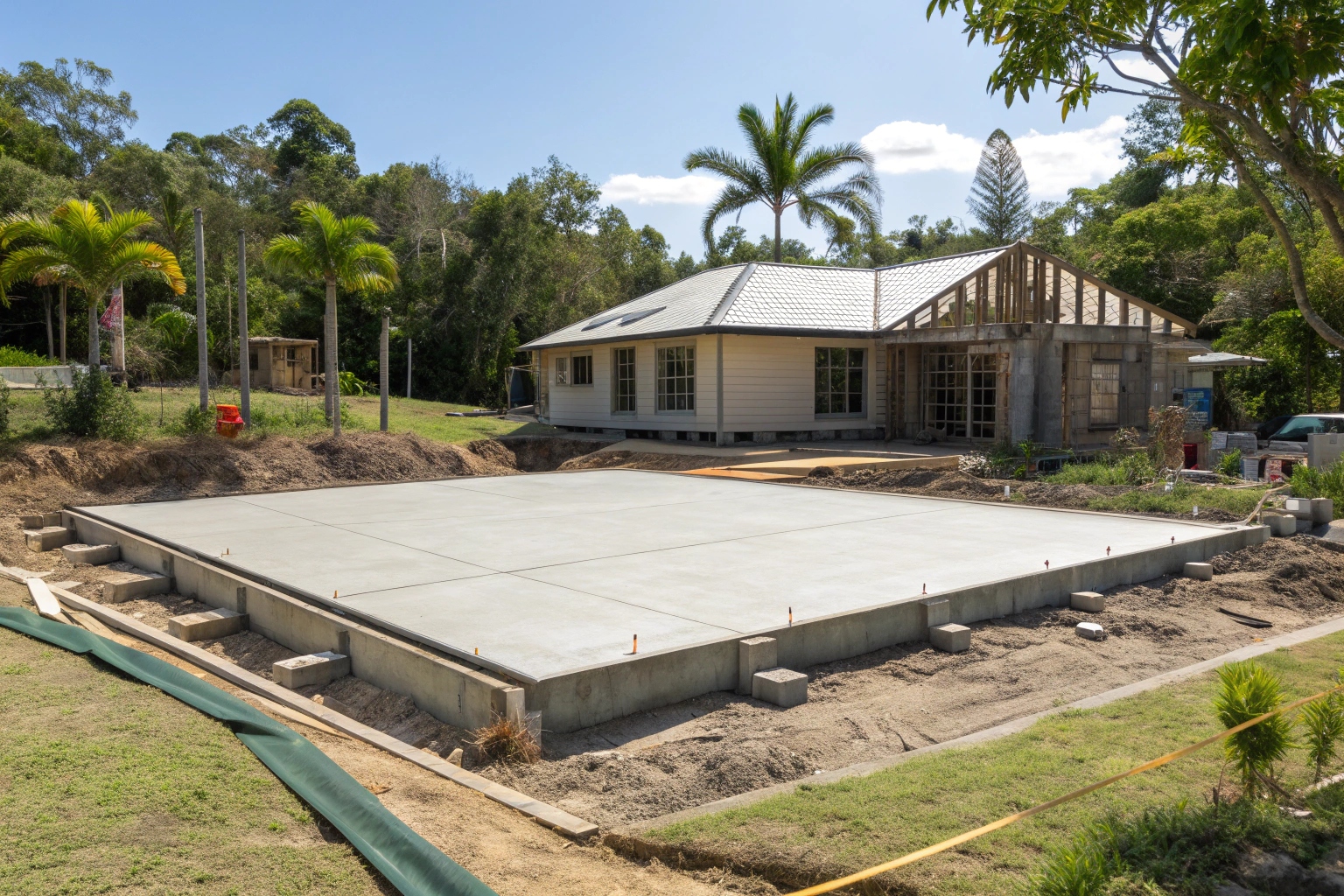
Every suburb has its quirks, and we’ve learned them all over the years. Some properties are straightforward. Others throw you curveballs that you need experience to handle.
Tree roots are a big one. You’ll be digging your footing trench and suddenly you’re into a massive root system. Sometimes the tree’s 10 meters away but the roots have spread under where you need to dig. You can’t just hack through them – damage the wrong roots and you’ll kill the tree, then you’ve got a dead tree that might fall on your house. We work around them or adjust footing locations with the engineer’s approval.
Rocky ground shows up in certain areas. You think you’re digging a simple 600mm footing, then you hit rock at 400mm. Now you need machinery to break through or you’re changing the design. Access matters too – if we can’t get excavation equipment to the site, everything takes longer and costs more.
Existing underground services cause headaches. Water pipes, sewer lines, electrical conduits, NBN cables – they’re all down there somewhere. We use Dial Before You Dig, but the plans aren’t always accurate. Hit a water main and you’ve shut down half the street.
Sloping blocks need stepped footings. The engineering gets more complex, the formwork takes longer, and you use more concrete. But it’s the only way to build stable on a slope. High water tables are another issue in some areas near the coast or low-lying suburbs. Your footings can’t sit in water – drainage solutions need to be designed in.
Frequently Asked Questions About Concrete Footings
Most residential footings around Townsville need to be 450mm to 600mm deep minimum. But it depends on your soil type. Highly reactive clay soils need deeper footings. The engineer’s soil test determines the exact depth for your property. We’ve done footings over 800mm deep in some problem areas.
For basic residential fences under certain heights, you might not need full engineering. But for anything structural – retaining walls, high fences, boundary fences in cyclone areas – you need proper design. Council requirements vary depending on what you’re building. Better to ask than guess wrong.
Concrete reaches handling strength in about 7 days, but full strength takes 28 days. For most residential work, you can start framing after a week if the weather’s been good. Your engineer or builder will advise based on the specific project and conditions.
Then your footings get designed for that. Might mean going deeper, using more reinforcement, or changing the footing type. It costs more upfront but saves you from expensive repairs later. We work with what you’ve got – can’t change your soil, but we can design around it.
It’s not ideal. Water in the excavation affects concrete strength and makes inspection difficult. Most engineers and council inspectors prefer dry conditions. If it’s urgent, we can do it with proper precautions, but expect delays if it rains.
Get Your Footings Done Right the First Time
Look, footings aren’t the exciting part of your project. Nobody’s going to walk past and admire your concrete footings. But they’re what keeps everything else standing when Townsville’s weather does its worst.
We’ve been doing this long enough to know what works in our soils and what doesn’t. We work with local engineers who understand the specific challenges of your suburb. Every job gets proper soil testing, engineering design, and council certification. No shortcuts, no guesswork, no problems down the track.
Whether you’re building a new home, putting up a fence, adding an extension, or constructing a retaining wall, your footings need to be right. Get them wrong and you’re looking at cracks, movement, and expensive repairs within a few years.
Call us for a free quote and site assessment. We’ll come out, have a look at your property, discuss what you’re planning to build, and give you an honest assessment of what’s needed. No obligations, just straight advice from people who know Townsville’s soils inside out.
Don’t wait until after the wet season to find out your footings weren’t up to the job. Let’s get them designed and installed properly from the start.
